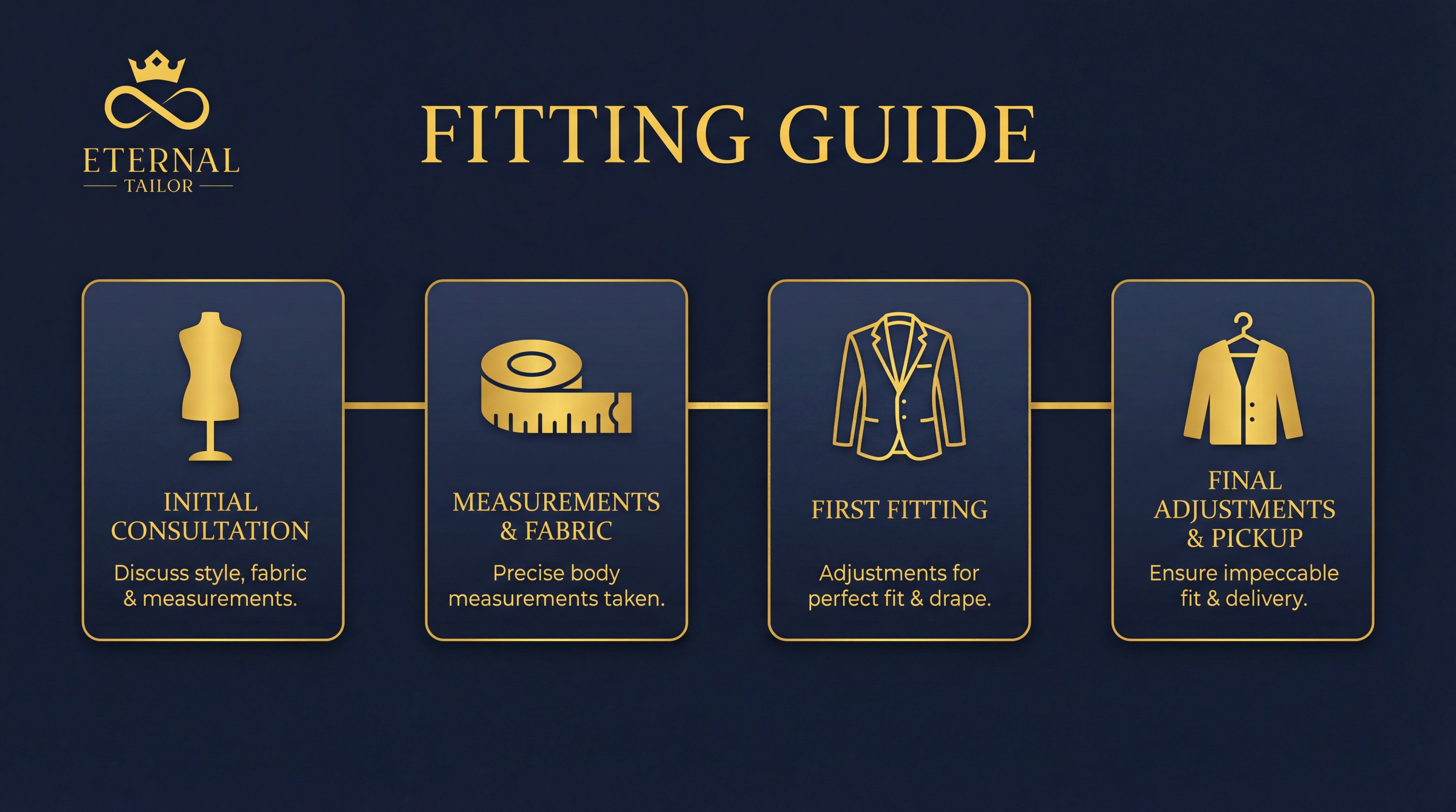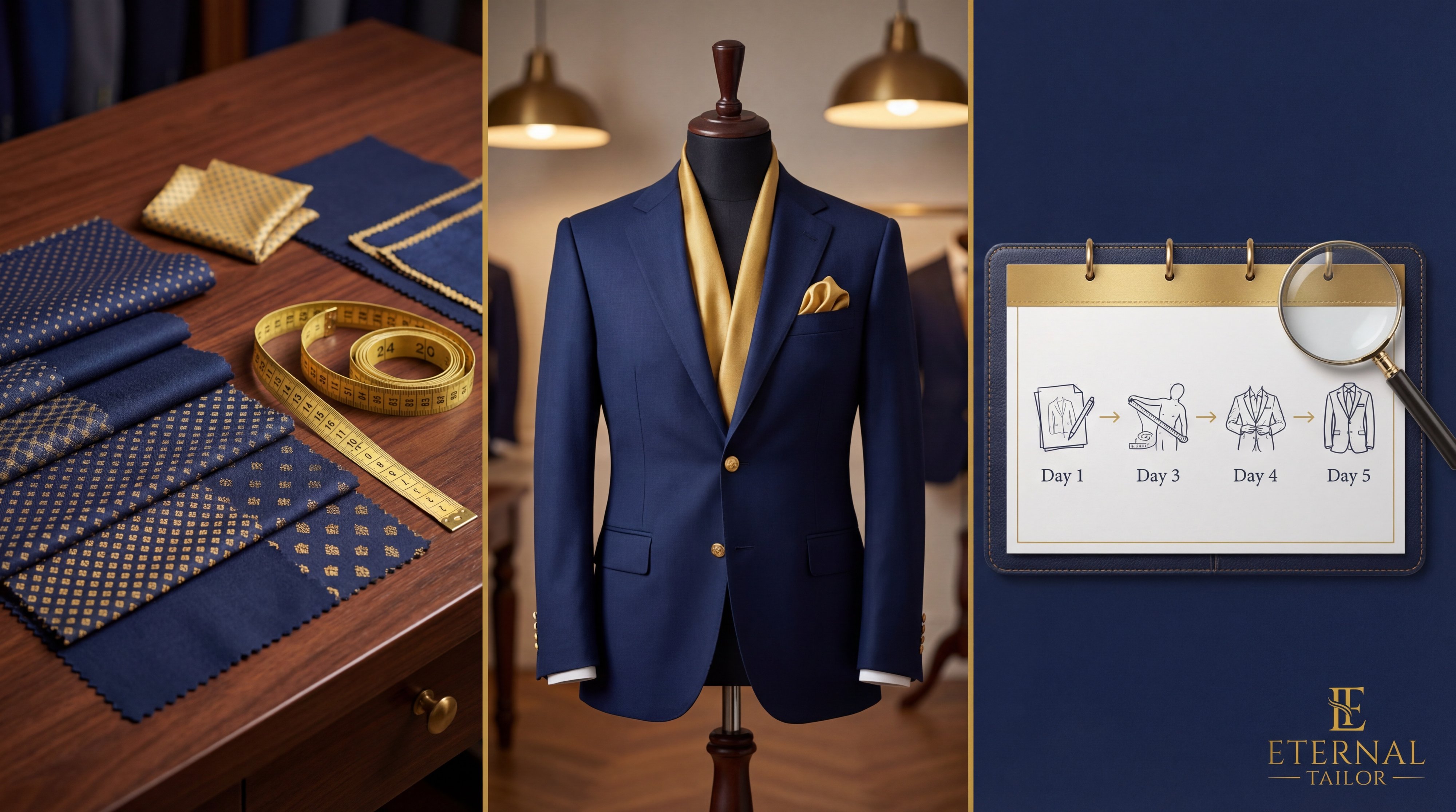
You've chosen your fabric, been measured, attended your fitting, and now the finished suit is in front of you. How do you know if it's actually well-made?
Quality tailoring isn't always obvious at first glance. A cheap suit can look impressive on a hanger. A well-made suit reveals its quality in the details — details you need to know how to spot.
This guide teaches you what to check before you hand over payment. Some signs are visible to anyone. Others require knowing where to look.
The 30-Second Overview
Before diving into details, here's a quick quality check you can do in under a minute:
- Feel the chest: Does it drape softly or feel stiff/cardboard-like?
- Check the buttonholes: Neat and even, or messy and irregular?
- Look at the pattern: Do stripes/checks align at seams?
- Examine the collar: Does it roll naturally or look flat and pressed?
- Turn it inside out: Is the interior clean and finished?
If all five pass, you're likely looking at quality work. If several fail, dig deeper or ask questions.
Construction: The Foundation
The most important quality factor is largely invisible — how the jacket is constructed internally.
Canvas vs. Fused
This is the single biggest difference between quality suits and cheap ones.
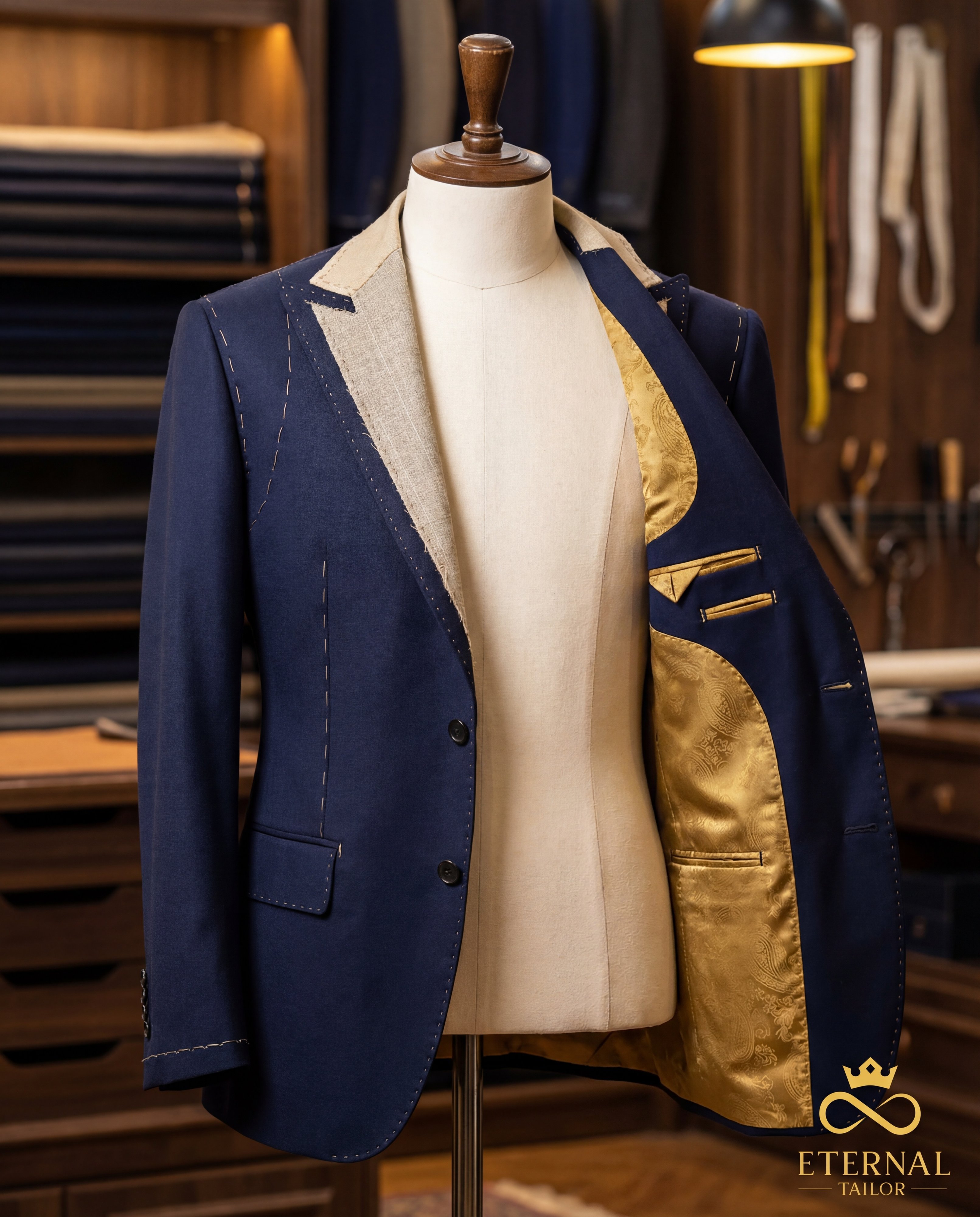
Full Canvas Construction:
- A layer of horsehair canvas is hand-stitched throughout the jacket's chest and lapels
- Allows the jacket to drape naturally and mold to your body over time
- Creates a soft, rolling lapel that looks natural
- Breathes better and lasts longer
- Takes more time and skill to produce
Half Canvas:
- Canvas in the chest and lapels only, fused elsewhere
- Good middle ground — quality where it matters most
- Common in quality ready-to-wear and many custom suits
- Performs well, costs less than full canvas
Fully Fused:
- No canvas — interlining is glued to the fabric
- Feels stiffer and more cardboard-like
- Lapels lie flat rather than rolling naturally
- Can bubble or delaminate over time (especially with dry cleaning)
- Faster and cheaper to produce
How to check:
Pinch the chest fabric between your fingers. Try to separate the outer fabric from the lining. In a canvassed jacket, you'll feel three distinct layers moving independently. In a fused jacket, the layers feel stuck together and won't separate.
Buttonholes: A Telling Detail
Buttonholes are one of the most visible indicators of construction quality.
Hand-Stitched Buttonholes
- Slightly irregular stitching (a sign of handwork, not a flaw)
- Thread has a subtle texture
- Often secured with a gimp thread for durability
- More three-dimensional appearance
- Found on higher-quality garments
Machine-Stitched Buttonholes
- Perfectly uniform stitching
- Flat, two-dimensional appearance
- Quicker to produce
- Perfectly acceptable on most suits
- Quality depends on the machine and operator
What to Check
- Are all buttonholes the same size and shape?
- Is the stitching tight and secure, with no loose threads?
- Do working buttonholes (surgeon's cuffs) actually function?
- Is the keyhole at the end properly formed?
Note: Machine buttonholes aren't inherently bad — many excellent suits have them. What matters is execution. Sloppy buttonholes (uneven, loose threads, irregular spacing) signal poor quality regardless of method.
Pattern Matching
If your fabric has stripes, checks, or plaids, pattern matching is a critical quality indicator.
Where to Check
Chest pocket:
The horizontal lines should continue unbroken from the jacket body into the pocket.
Lapels:
Stripes should align where the lapel meets the jacket body.
Back seam:
Vertical stripes should meet precisely at the center back seam.
Sleeve attachment:
The hardest match — quality tailors align patterns at the sleeve-shoulder junction.
Trouser side seam:
Stripes should continue through the outseam.
Why It Matters
Pattern matching requires careful cutting and wastes more fabric. Tailors who take this care are demonstrating attention to detail throughout the garment.
The reality: Perfect pattern matching at every point is extremely difficult. Most quality tailors prioritize chest, pockets, and back seam. Sleeve matching is a premium detail. If patterns are wildly mismatched everywhere, that's a concern.
Collar and Lapels
The collar is constantly visible and reveals a lot about construction quality.
The Collar Roll
Quality collars "roll" softly from the gorge line up to the neck. This creates a natural, three-dimensional appearance.
Signs of quality:
- Collar lies flat against your shirt without gaps
- Natural roll rather than flat, pressed appearance
- Gorge line (where collar meets lapel) is clean and smooth
- No puckering or pulling at the join
Red flags:
- Collar stands away from your neck (poor fit or construction)
- Flat, lifeless lapels without shape
- Visible puckering at the gorge
- Uneven lapel widths
Lapel Feel
Run your finger along the lapel edge. Quality lapels have:
- A rolled edge (not sharp or flat)
- Soft, natural drape
- Bridle stitching you might feel (hand-stitched internal support)
Pockets
Pocket construction reveals attention to detail.
Chest Pocket
- Should sit at a slight angle (not perfectly horizontal)
- Welts (the lips of the pocket) should be even
- No puckering around the pocket edges
- If there's a pattern, it should match
Hip Pockets
Flap pockets:
- Flaps should be identical in size and shape
- Should lie flat without curling
- Pattern matching if applicable
Jetted pockets:
- Welts should be perfectly even
- Clean, sharp edges
- No visible stitching on the outside
Patch pockets:
- Edges should be clean and consistent
- Corners neatly finished (not rounded sloppily)
- Pattern matching on patterned fabrics
Internal Pockets
Check inside the jacket:
- Pockets should be neatly finished
- No raw edges visible
- Adequate depth for actual use
Seams and Stitching
The quality of seams reveals the skill of construction.
What to Check
Stitch count:
Higher stitches per inch (SPI) generally indicates quality. Look for 8-10+ SPI on visible seams.
Thread tension:
Stitches should lie flat, not puckering the fabric.
Seam alignment:
Seams should be straight and even, not wavy.
Seam finishing:
Inside seams should be finished (serged or bound), not left raw.
Pick Stitching
Pick stitching is decorative hand-stitching along lapel edges, pocket flaps, and sometimes the front edge.
Signs of quality pick stitching:
- Slightly irregular spacing (handwork)
- Consistent depth from the edge
- Clean, small stitches
- Contrasting or matching thread (both acceptable)
Note: Pick stitching can be done by machine too. Hand pick stitching has subtle irregularities; machine pick stitching is perfectly uniform.
The Lining
Turn the jacket inside out. The interior tells a story.
Lining Fabric
Quality linings:
- Bemberg (cupro) — smooth, breathable, natural fiber
- Silk — luxurious, breathable, delicate
- Quality viscose — acceptable mid-range option
Avoid:
- Cheap polyester — traps heat, doesn't breathe, feels plasticky
Lining Construction
Signs of quality:
- Seams are finished (not raw)
- Lining has ease (slight looseness) allowing movement
- Pattern pieces are well-cut (not obviously recycled)
- Internal pockets are neatly constructed
- No visible glue or bonding tape
The quarter lining/half lining:
- Exposes more construction
- Quality tailors finish exposed seams beautifully
- Poor tailors leave raw edges or messy finishing
The Maker's Label
Many quality tailors include internal labels showing:
- The fabric mill used
- The tailor's name and date
- Sometimes your name
This isn't just branding — it's accountability.
Shoulders
Shoulder construction dramatically affects how a jacket looks and feels.
Shoulder Fit
- Seam should sit exactly at your shoulder point
- No dimpling or divots where the sleeve attaches
- No pulling or stress lines
- Natural shoulder shape, not overly padded or droopy
Sleeve Attachment
The sleeve head (top of the sleeve where it meets the shoulder) should:
- Attach smoothly without puckering
- Have appropriate fullness for movement
- Not show stress lines when arms hang naturally
Shoulder Padding
Run your hand over the shoulder:
- Quality padding creates natural shape
- Shouldn't feel lumpy or uneven
- Should blend naturally into the arm
Buttons
Small detail, but revealing.
Button Quality
Quality buttons:
- Natural materials: horn, mother of pearl, corozo (vegetable ivory)
- Substantial weight in hand
- Natural variation in pattern/color
Lower quality:
- Plastic (light, uniform, cheap appearance)
- Perfectly identical (indicates synthetic)
Button Attachment
- Buttons should be securely attached with a thread shank
- The shank allows the button to sit properly when fastened
- No loose buttons or dangling threads
- Spare buttons included (usually on internal pocket or tag)
Trousers
Don't forget to examine the trousers with the same care.
Waistband
- Should be substantial, not flimsy
- Interior should be finished cleanly
- Curtain (extra fabric inside) indicates quality
- Brace buttons or suspender buttons are a traditional detail
Pockets
- Front pockets should lie flat, not gape
- Back pockets should be neatly finished
- Pocket bags should be sturdy fabric
Hem
- Clean finishing, no raw edges
- Appropriate break for your shoes
- If cuffed, cuffs should be even and well-pressed
Fly
- Zipper should operate smoothly
- Stitching should be hidden
- Interior should be neatly finished
The Final Test: Fit
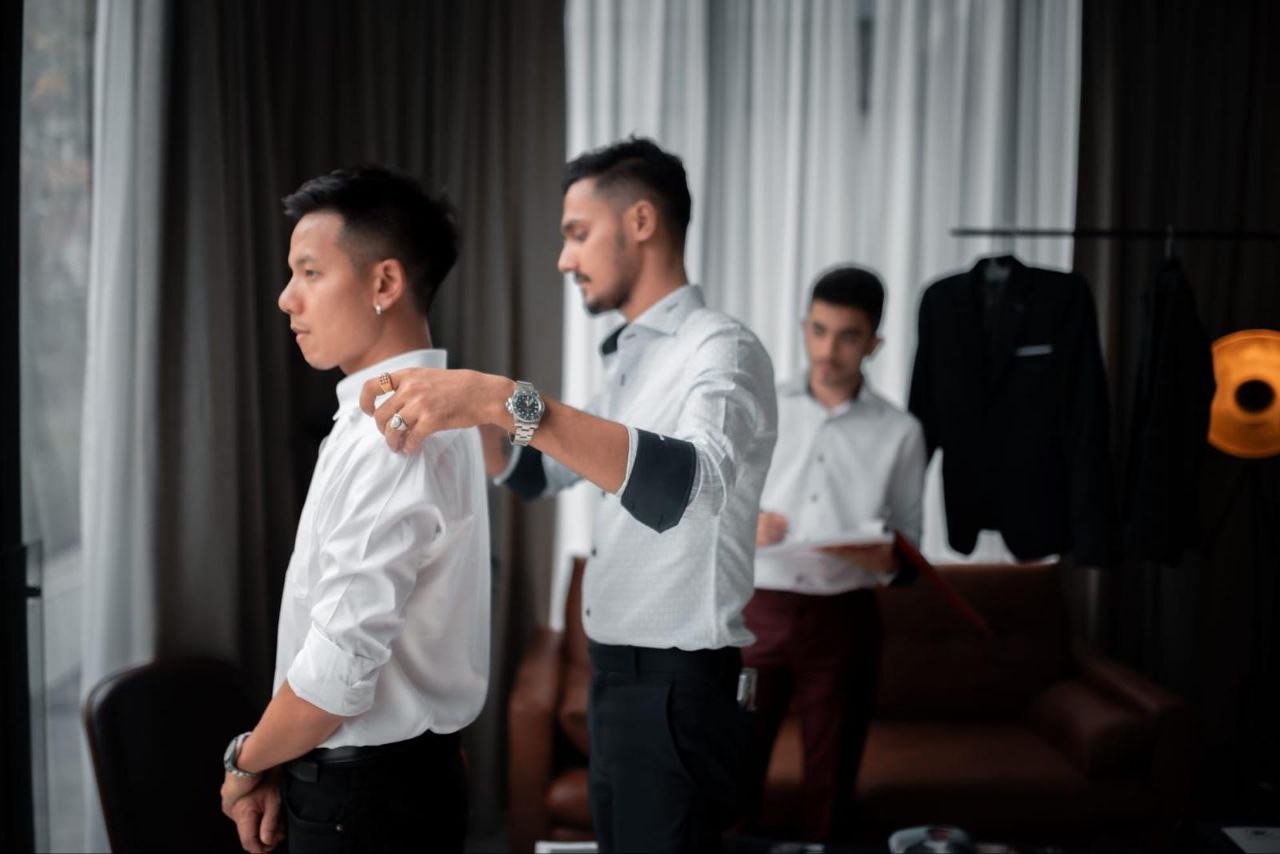
All the quality details in the world don't matter if the suit doesn't fit.
Signs of Good Fit
Jacket:
- Collar lies flat against shirt collar, no gaps
- Shoulders end at your shoulder point
- Chest is smooth, no pulling at the button
- You can move your arms comfortably
- Back is smooth, no stress lines
- Sleeves show 1-2cm of shirt cuff
Trousers:
- Waist sits comfortably without a belt
- Seat has enough room to sit
- Thighs allow movement without excess fabric
- Clean break over shoes (per your preference)
Questions to Ask Your Tailor
Before paying, ask:
- "What type of construction is this — canvas, half-canvas, or fused?"
- "Where is the canvas, if any?"
- "Are the buttonholes hand or machine finished?"
- "What fabric is the lining?"
- "What material are the buttons?"
- "Can you walk me through the construction?"
Quality tailors are proud of their work and happy to explain. Evasive answers are a red flag.
Quality at Eternal Tailor
We believe in transparent craftsmanship. Here's what you'll find in our suits:
Construction:
- Half-canvas standard, full canvas available
- Hand-finished details on premium orders
- Quality Bemberg linings
Details:
- Pattern matching at all critical points
- Quality horn or mother of pearl buttons
- Properly constructed pockets and seams
Fit:
- Fitting included to ensure proper fit
- Adjustments after delivery covered
- We stand behind every garment
We're happy to show you exactly how your suit is made — inside and out. Understanding quality helps you appreciate the value of what you're receiving.
Address: 1045 Si Lom Rd, under State Tower (Lebua), Bangkok
WhatsApp: +66 97 986 6373