Your First Visit to a Bangkok Tailor: What to Expect
Walking into a tailor shop for the first time can feel intimidating. Bolts of fabric line the walls. Terms like "notch lapel" and "half-canvas" get thrown around. Someone hands you a tape measure and starts asking questions you've never considered.
It doesn't have to be overwhelming. Once you understand the process, a tailor visit becomes straightforward — even enjoyable. This guide walks you through exactly what happens, step by step, so you know what to expect before you arrive.
Before You Go: Quick Preparation
A little preparation makes your first visit smoother and more productive.
Know What You Want (Roughly)
You don't need to arrive with every detail decided. But having a general idea helps:
- What type of garment? Suit, blazer, trousers, shirt?
- What's the occasion? Business, wedding, casual?
- Any style preferences? Slim fit, classic, double-breasted?
- Budget range? This helps the tailor recommend appropriate fabrics.
Bring Reference Images
If you've seen a suit style you like — in a movie, on a colleague, in a magazine — save the image on your phone. Visual references communicate more than words ever could. A tailor can look at a photo and immediately understand what you're after.
Wear the Right Undergarments
This sounds obvious, but it matters. Wear:
- A fitted undershirt (the kind you'd wear under a dress shirt)
- Well-fitting trousers (not baggy jeans)
- Dress shoes if you have them (heel height affects trouser length)
The tailor needs to see how clothes will actually sit on your body.
Block Enough Time
Plan for 45 minutes to an hour for a first visit. You might finish faster, but rushing leads to decisions you'll regret. This is an investment — treat it like one.
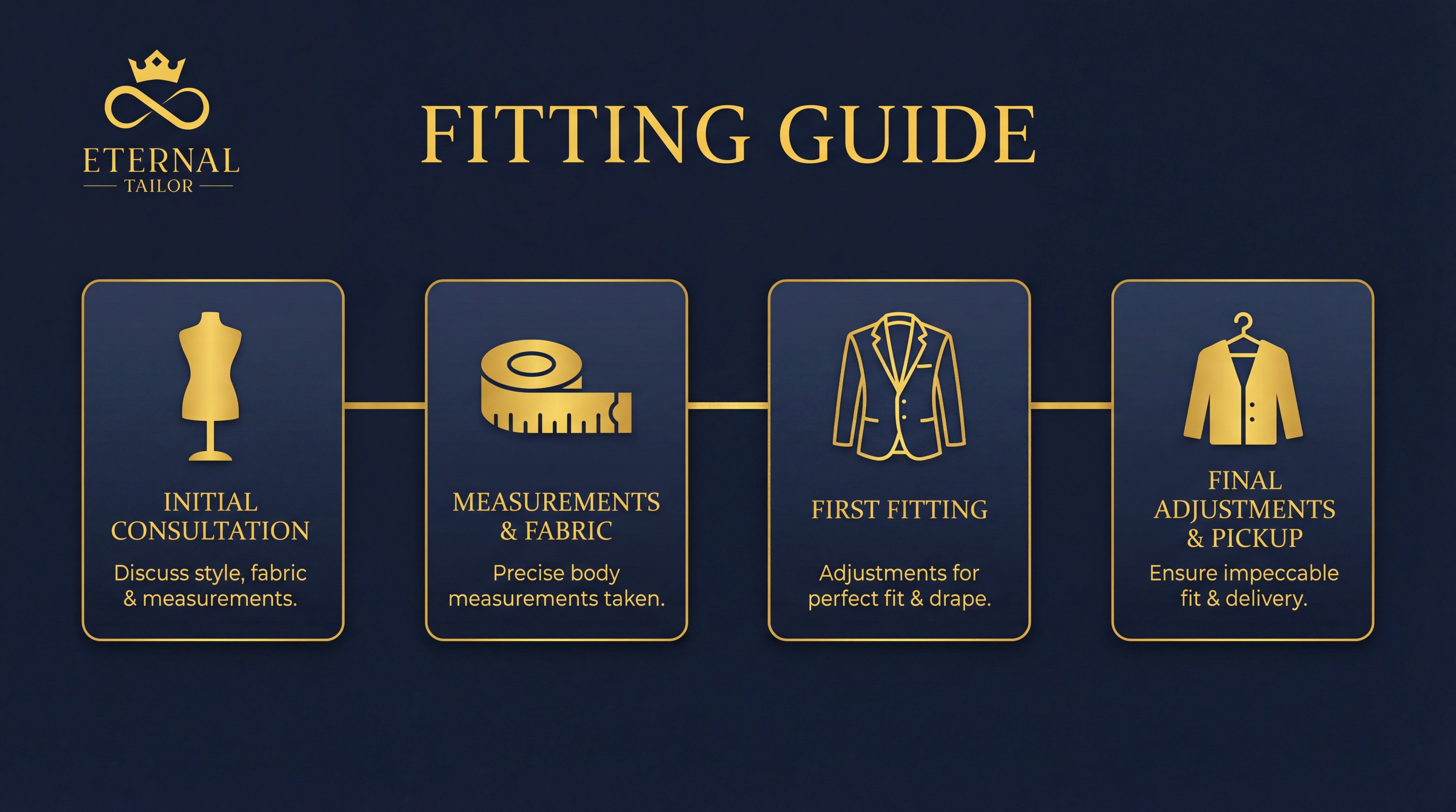
Step 1: The Consultation (10-15 minutes)
Your visit starts with a conversation, not measurements. A good tailor wants to understand:
Your needs:
- What will you use this garment for?
- How often will you wear it?
- Do you need it for a specific event or date?
Your preferences:
- Do you prefer a closer fit or more room?
- Single-breasted or double-breasted?
- Any details you specifically want or want to avoid?
Your lifestyle:
- Do you travel frequently? (Affects fabric choices)
- What's your climate like at home?
- How much maintenance are you willing to do?
This isn't small talk. Every answer informs decisions about fabric, construction, and fit. Be honest. If you hate ironing, say so — the tailor will recommend wrinkle-resistant options.
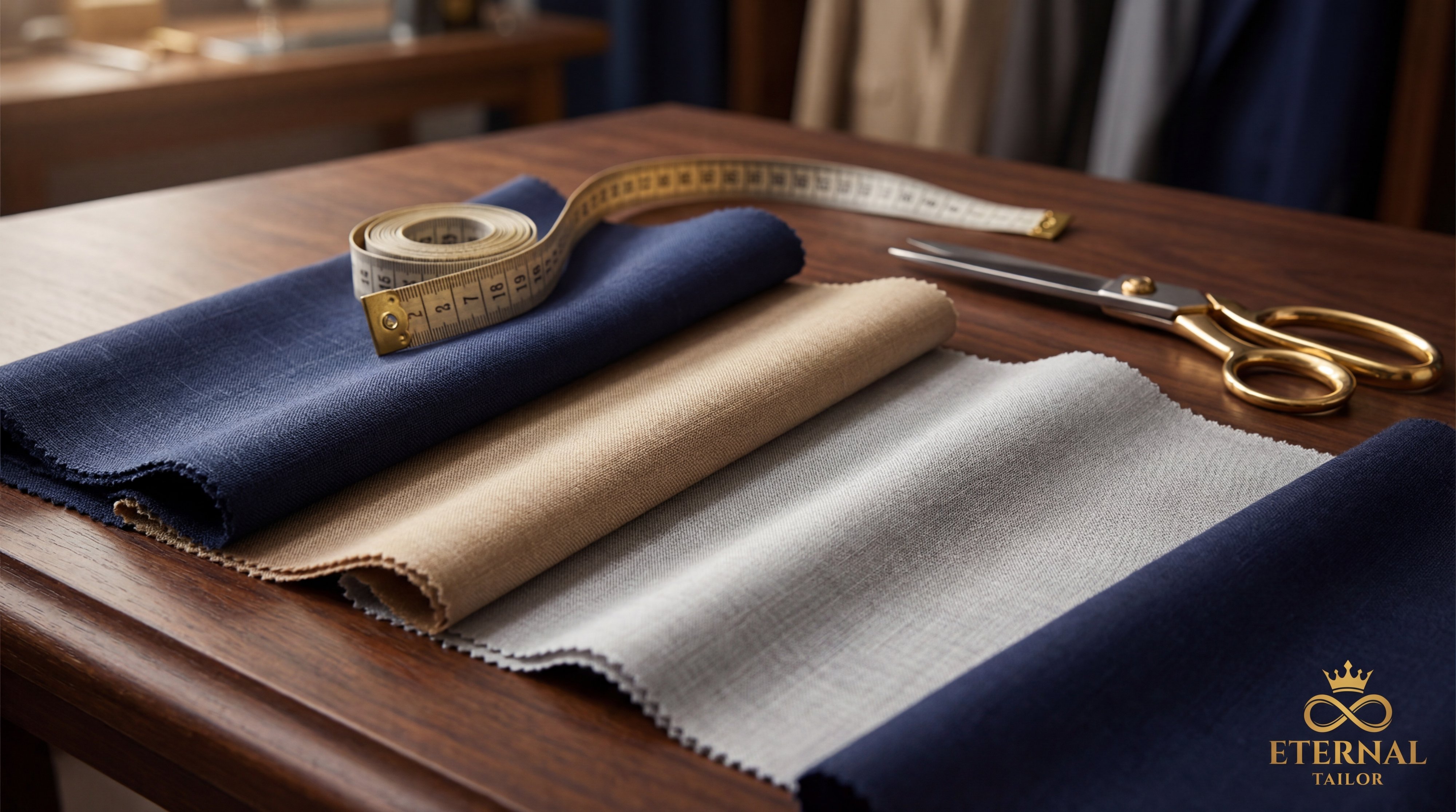
Step 2: Fabric Selection (15-20 minutes)
This is where many first-timers feel overwhelmed. Hundreds of swatches, unfamiliar terminology, prices that vary wildly. Here's how to navigate it.
Understanding Fabric Categories
Wool: The classic choice for suits. Breathes well, drapes beautifully, comes in weights from tropical (lightweight) to winter (heavy). Most versatile option.
Linen: Perfect for hot climates. Lightweight and breathable. Wrinkles naturally — this is part of its character, not a flaw.
Cotton: Casual and comfortable. Great for unstructured blazers and summer trousers. Less formal than wool.
Blends: Wool-linen, wool-silk, wool-cotton. Combine properties of different fibers. Often a smart choice for Bangkok's climate.
What to Consider
-
Weight: Ask for the GSM (grams per square meter). For Bangkok weather, 200-280gsm wool works well. Heavier fabrics become uncomfortable.
-
Color: Navy and charcoal are most versatile. Lighter grays and blues work for daytime. Black is formal but less flexible.
-
Pattern: Solids are safest for a first suit. Subtle pinstripes add visual interest without being loud. Bold patterns require confidence.
Price Differences
Fabric is the biggest price variable. The difference between a $200 suit and an $800 suit is largely the cloth. Named mills (Loro Piana, Vitale Barberis Canonico, Scabal) cost more but offer superior drape, durability, and feel.
Ask the tailor to explain what you're getting at different price points. A good tailor won't upsell — they'll help you find the right balance for your budget and needs.
Step 3: The Measurements (15-20 minutes)
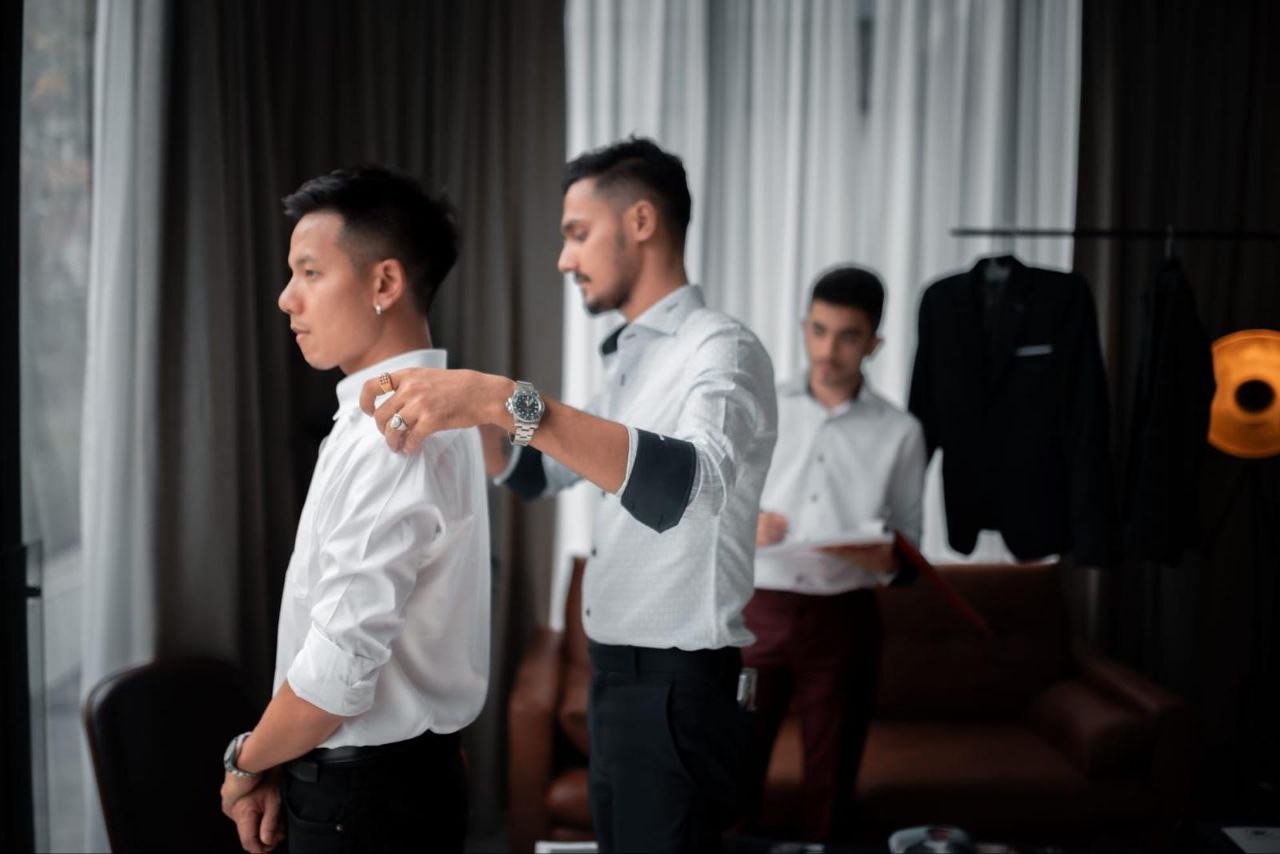
Now the tape measure comes out. A thorough measurement session covers 20+ points on your body. Here's what's being measured and why.
Upper Body
- Chest: Around the fullest part
- Shoulders: Point to point across the back
- Sleeve length: Shoulder to wrist, with arm slightly bent
- Back length: Base of neck to waist
- Arm circumference: For proper sleeve width
Lower Body
- Waist: Where you actually wear your trousers
- Hips: Fullest part of the seat
- Inseam: Crotch to ankle
- Outseam: Waist to ankle
- Thigh circumference: For proper trouser fit
The Details That Matter
Beyond raw measurements, an experienced tailor observes:
- Posture: Do you stand straight or lean forward?
- Shoulder slope: Are your shoulders level or does one drop?
- Arm position: Do your arms hang straight or angle outward?
- Asymmetries: Everyone has them. Good tailors account for differences between left and right.
Don't be surprised if the tailor asks you to stand naturally, then walk around, then sit down. They're watching how your body moves — information that shapes the final fit.
Step 4: Design Details (10-15 minutes)
With fabric chosen and measurements taken, it's time to specify the details. For a suit jacket, decisions include:
Lapels
- Notch: Classic, versatile, appropriate for business
- Peak: More formal, elongates the torso
- Shawl: Typically reserved for tuxedos and dinner jackets
Buttons
- Two-button: Modern standard, flattering on most body types
- Three-button: More traditional, works well on taller frames
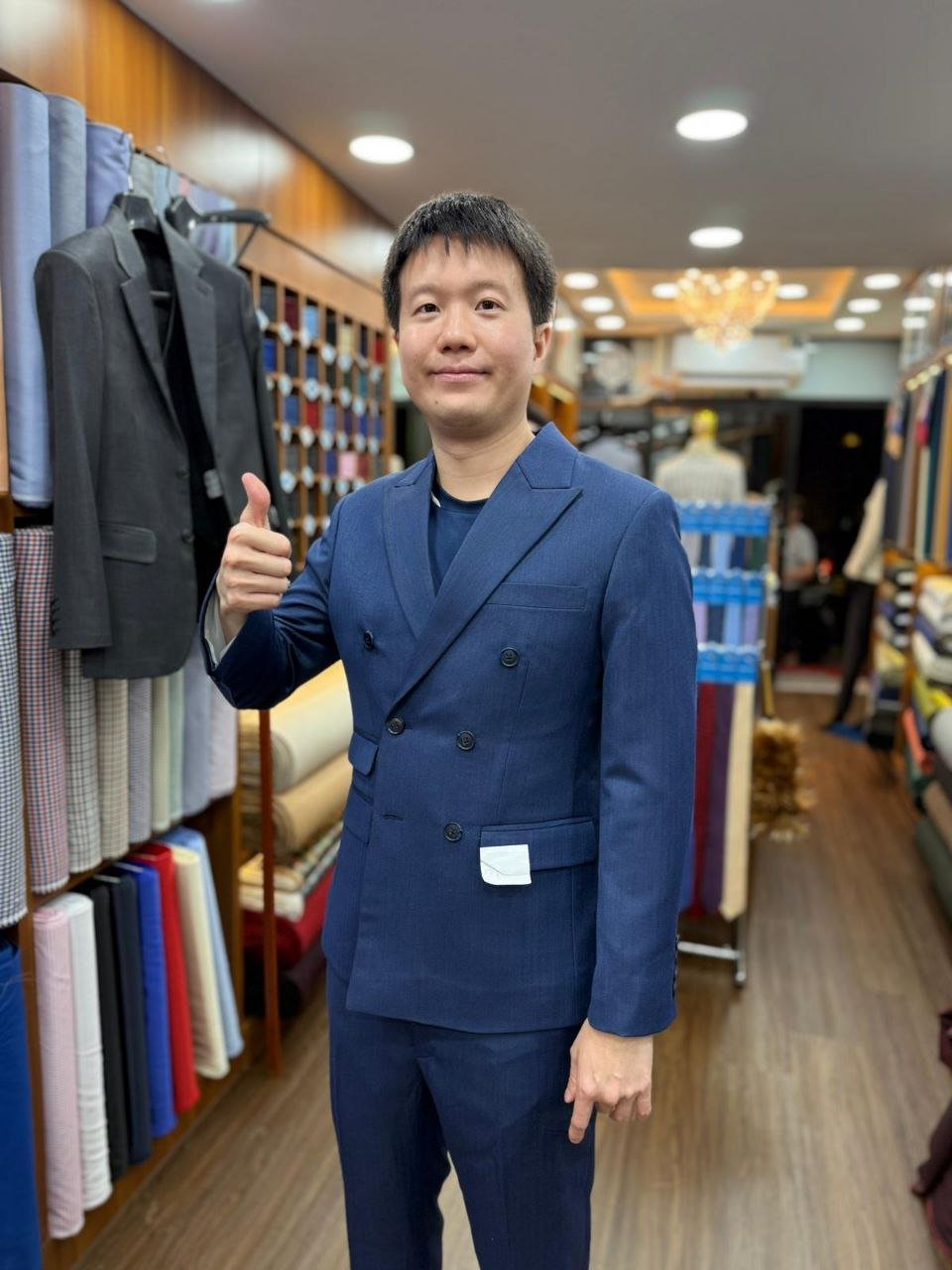
- Double-breasted: Bold, formal, having a fashion moment
Vents
- Single vent: Traditional, common in American tailoring
- Double vents: Allows jacket to drape cleanly when seated, common in British/Italian tailoring
- No vent: Sleek but less practical
Pockets
- Flap pockets: Standard, appropriate for business
- Jetted pockets: Cleaner look, more formal
- Patch pockets: Casual, typically on unstructured blazers
Lining
- Full lining: Standard, hides construction, adds structure
- Half lining: Cooler, lighter, shows more craftsmanship
- Unlined: Casual summer jackets only
Your tailor will guide you through these choices. If you're unsure, classic options (notch lapels, two buttons, double vents, flap pockets) work for almost any situation.
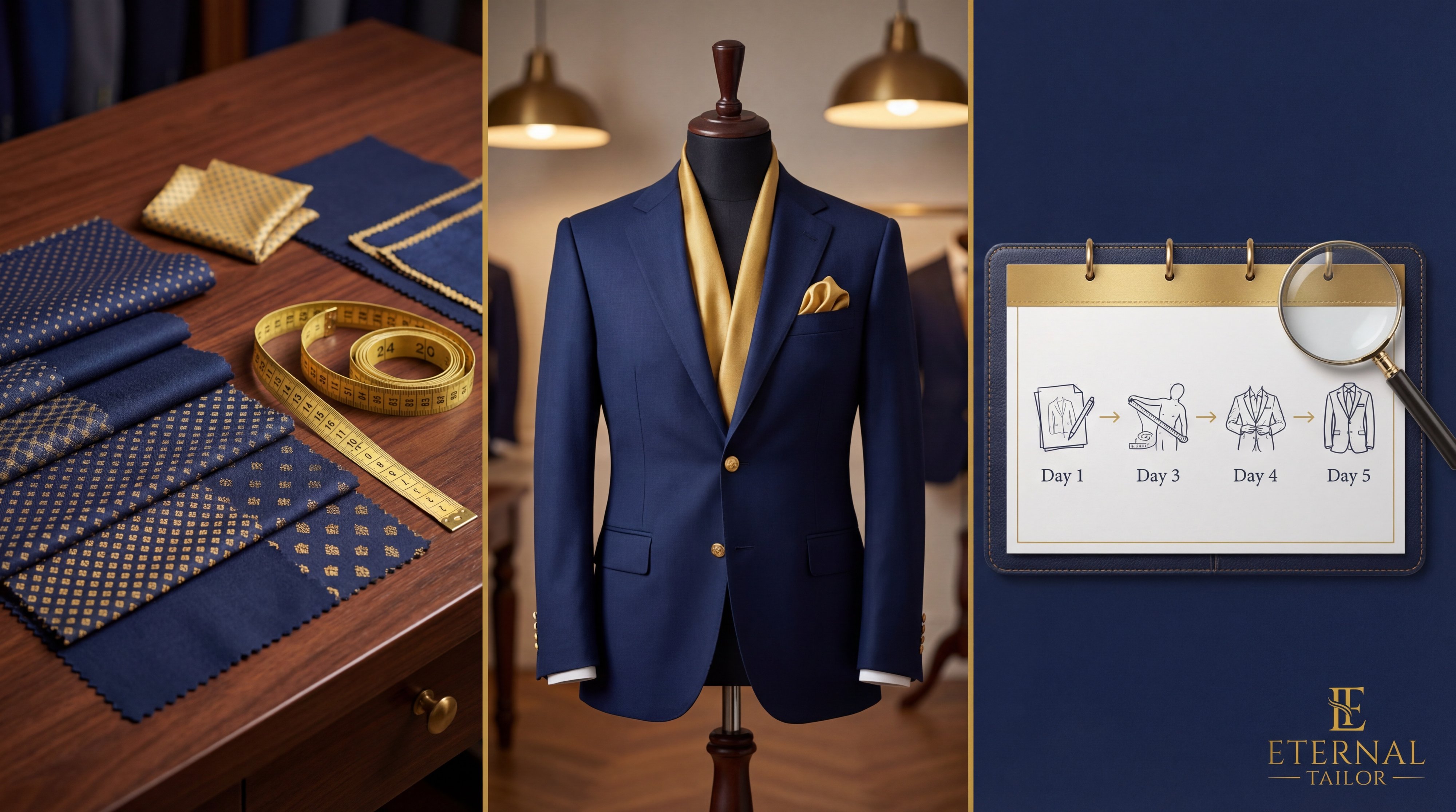
Step 5: Timeline and Next Steps
Before you leave, confirm:
- When is the first fitting? Usually 2-4 days for standard orders.
- How many fittings are included? Most quality tailors include at least one.
- What's the total timeline? Factor in your departure date if you're traveling.
- What's the payment structure? Typically 50% deposit, balance on completion.
- Can they accommodate changes? Life happens — know the policy.
Get everything in writing or at least confirmed via WhatsApp. Clear communication prevents misunderstandings.
The Fitting: What Happens Next
A few days later, you'll return for your fitting. The garment will be partially constructed — enough to assess fit, not yet finished.
At the fitting:
- Try on the garment over appropriate underclothes
- The tailor marks adjustments with chalk or pins
- You'll be asked to move — sit, raise your arms, button and unbutton
- Discuss any concerns or changes
This is your chance to speak up. Too tight in the chest? Say so. Sleeves feel long? Mention it. Adjustments are expected — that's the whole point.
After the fitting, final construction begins. A few days later, you'll pick up your completed garment.
Tips for First-Timers
Take your time. Rushing leads to regret. If a tailor pressures you, that's a red flag.
Ask questions. No question is stupid. Good tailors enjoy explaining their craft.
Trust the process. The garment at your fitting won't look like the finished product. That's normal.
Communicate clearly. If something feels wrong, say so. Tailors aren't mind readers.
Take photos. Document your choices. Helpful for future orders or if questions arise.
Your First Visit to Eternal Tailor
We welcome first-timers daily. Our process is designed to be approachable, unhurried, and collaborative.
What to expect with us:
- Personal consultation to understand your needs
- Access to premium fabrics from Italian, English, and Australian mills
- 20+ measurements by our master tailor
- Clear explanation of every choice
- Fitting included with every order
- No pressure, no upselling
We're located beneath the Lebua State Tower in Silom. Walk-ins welcome, but appointments ensure our master tailor is available for your consultation.
Can't visit our shop? We offer complimentary hotel visits throughout Bangkok. We bring our fabric collection to you.
Address: 1045 Si Lom Rd, under State Tower (Lebua), Bangkok
WhatsApp: +66 97 986 6373
Book online: eternaltailor.com/contact